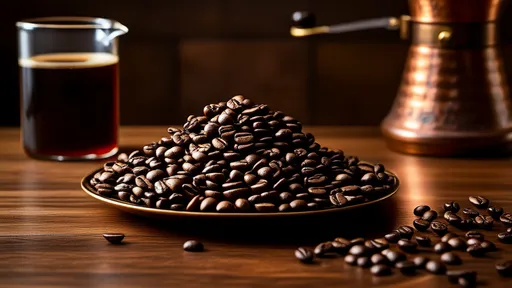
In the world of coffee, a quiet but fierce battle has been brewing for centuries, one that pits two titans of the bean against each other: Coffea arabica and Coffea canephora, more commonly known as Robusta. This is not a conflict fought with weapons, but with flavors, aromas, and the very essence of what makes a cup of coffee great. It's a war for the palate of the world, and the front lines are everywhere from sprawling Brazilian plantations to the cozy corner café.
The story begins with Arabica, the undisputed king of specialty coffee. Hailing from the highlands of Ethiopia, Arabica beans are often described as the more sophisticated, nuanced sibling. They thrive at higher altitudes, requiring specific climatic conditions—cooler temperatures, ample rainfall, and well-drained soil. This finicky nature makes them more susceptible to diseases like coffee leaf rust and pests, ultimately driving up their cost. But for many, the expense is justified. The flavor profile of a well-grown Arabica is a complex symphony. It can offer a wide range of tasting notes, from the bright, citrusy acidity of a Kenyan AA to the deep, winey tones of a Ethiopian Yirgacheffe, often accompanied by hints of sugar, fruit, and berries. Its caffeine content is lower, typically around 1.2% to 1.5%, which contributes to a smoother, less bitter experience. For the connoisseur, Arabica is the bean of choice, the foundation of the third-wave coffee movement that prioritizes origin, artisanal roasting, and precise brewing methods.
Enter Robusta, the hardy challenger. As its name implies, this variety is robust. It grows at lower altitudes, is resistant to disease, and yields more cherries per plant. It's the workhorse of the coffee industry, accounting for a significant portion of the world's production, particularly in Vietnam, which is now a leading exporter. Robusta's flavor is often characterized as stronger, harsher, and more straightforward. It possesses a distinct, earthy, and sometimes nutty or grainy taste, with a punchy bitterness that can be overwhelming if not balanced correctly. Its higher caffeine content, nearly double that of Arabica at 2.2% to 2.7%, acts as a natural pest deterrent and also contributes to its characteristic boldness and that thick, crema-laden head so prized in traditional Italian espresso blends. For decades, Robusta has been the bean of mass-produced instant coffees and lower-end commercial blends, often maligned by coffee snobs as inferior.
For a long time, the narrative was simple: Arabica was good, and Robusta was bad. This dichotomy, however, is rapidly becoming outdated. The so-called war is evolving from a simple battle into a fascinating dialogue about quality, sustainability, and taste. The specialty coffee scene is beginning to re-evaluate Robusta. A new wave of producers is focusing on high-quality, carefully processed Robusta beans that defy their bitter reputation. Washed and honey-processed Robustas from regions like India and Uganda are emerging, offering complex profiles with notes of dark chocolate, malt, and even spices, challenging the very definition of what a "good" coffee can be. This shift is forcing a reevaluation of the old hierarchy.
The battle truly plays out in the cup and in the market. In your morning espresso, the two often meet. Many classic Italian espresso blends intentionally marry the two beans. The Arabica provides the complex top notes and acidity, while the Robusta contributes body, that signature crema, and a caffeine kick that defines the espresso experience. In the mass market, cost is king. The lower price point of Robusta makes it an essential component for large-scale producers aiming for consistency and affordability, ensuring that billions of people around the world can access their daily caffeine fix. Meanwhile, the high-end, single-origin Arabica market continues to flourish, catering to those who seek a terroir-driven, story-filled experience in their mug.
Beyond flavor, the conflict extends to the very future of coffee cultivation. Climate change poses an existential threat to Arabica's preferred cool-weather growing regions. As temperatures rise, the viable land for cultivating delicate Arabica plants shrinks. Here, Robusta's resilience presents a potential solution. Its ability to withstand higher temperatures and resist disease makes it a crucial genetic resource for developing hybrids and ensuring the long-term survival of coffee production worldwide. The war is no longer just about taste; it's about adaptation and survival.
So, who wins the flavor duel? The answer is delightfully subjective and ultimately lies with the drinker. The Arabica devotee will forever champion its elegant complexity and aromatic subtlety. The Robusta advocate, or the newly converted specialty Robusta fan, will praise its bold, unapologetic strength and creamy texture. The true victory, however, belongs to the coffee lover today. We are no longer confined to a binary choice. The expanding landscape means we have an unprecedented spectrum of flavors to explore, from the most delicate, tea-like Gesha Arabica to a powerfully rich and chocolatey fine Robusta. The war between Arabica and Robusta has not ended in a decisive victory for one side. Instead, it has matured into a rich and diverse ecosystem, pushing the entire industry toward greater quality, innovation, and inclusivity. The real winner is the global coffee culture itself, forever enriched by the tension between these two remarkable beans.

By /Aug 29, 2025

By /Aug 29, 2025
By /Aug 29, 2025
By /Aug 29, 2025

By /Aug 29, 2025
By /Aug 29, 2025

By /Aug 29, 2025

By /Aug 29, 2025

By /Aug 29, 2025
By /Aug 29, 2025

By /Aug 29, 2025

By /Aug 29, 2025
By /Aug 29, 2025

By /Aug 29, 2025
By /Aug 29, 2025
By /Aug 29, 2025

By /Aug 29, 2025
By /Aug 29, 2025

By /Aug 29, 2025
By /Aug 29, 2025
