In the heart of Moroccan culture lies a ritual that transcends mere beverage preparation—the art of tea making. Among its many fascinating aspects, one stands out both visually and symbolically: the creation of a rich, frothy foam by pouring the tea from a height. This practice is not merely for show; it is steeped in tradition, science, and a deep sense of hospitality.
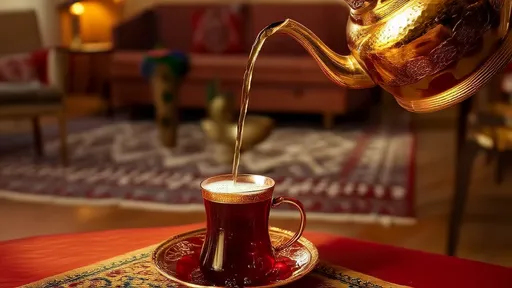
The process begins with the careful selection of ingredients. Moroccan tea, typically a blend of green tea, fresh mint, and an abundance of sugar, is prepared in a teapot often made of silver or stainless steel. However, the magic happens during the pouring. The server, usually the head of the household or a designated host, lifts the teapot high above the glass—sometimes as much as a meter or more—and pours the liquid in a steady, thin stream. This action aerates the tea, incorporating tiny bubbles that form a thick, creamy foam on the surface of each glass.
The science behind this foam is intriguing. When the tea is poured from a height, it accelerates and stretches into a narrow stream, increasing its surface area and allowing air to be trapped within the liquid. The sugar content plays a crucial role; it increases the viscosity of the tea, helping to stabilize the bubbles and prevent them from popping immediately. The mint leaves, often bruised during the preparation, release oils that can further enhance the foam's stability and add to the aromatic experience. Together, these elements create a persistent froth that is both a visual delight and a textural enhancement to the drink.
But the foam is much more than a culinary phenomenon; it is a symbol of generosity and skill. In Moroccan society, the quality of the foam reflects the host's dedication and expertise. A thick, consistent foam indicates that the host has taken the time and effort to prepare the tea properly, showing respect and warmth toward the guests. It is said that the foam should be abundant enough to slightly overflow the glass, symbolizing an overflow of hospitality and goodwill. This gesture transforms the act of serving tea into an expression of friendship and community.
The ritual of high pouring is also a performance, a dance of precision and grace. It requires practice and a steady hand to achieve the perfect stream without spilling. The sound of the tea splashing into the glass, combined with the rising aroma of mint and tea, engages multiple senses, making the ceremony a holistic experience. This performance is often conducted with flair, especially in social gatherings or for honored guests, turning a simple drink into a memorable event.
Historically, the tradition of pouring tea from a height has roots in Berber and Arab customs, where tea was introduced in the 18th century and quickly became a national staple. The method may have evolved as a practical way to cool the hot tea quickly in the arid climate, but it soon took on cultural significance. Over time, it became an art form, passed down through generations, with each family perhaps adding its own subtle variations—adjusting the height, the pour, or the ingredients to perfect their unique foam.
In modern times, while the essence of the ceremony remains unchanged, its context has expanded. Moroccan tea is now enjoyed worldwide, and the foam-making technique has become a hallmark of authenticity. It is not uncommon to see demonstrations in Moroccan restaurants or at cultural festivals, where the spectacle draws admiration and curiosity. Yet, despite its spread, the deepest meaning of the foam is still best appreciated in a traditional setting—a home in Morocco, where the host pours with pride and the guests receive with gratitude.
Ultimately, the foam on Moroccan tea is a testament to the culture's emphasis on beauty in detail. It shows how a everyday act can be elevated to an art, embedding deeper values of care, precision, and human connection. Each bubble in the foam carries with it a story of tradition, a touch of science, and a generous spirit, making every glass not just a drink, but a celebration of Moroccan heritage.

By /Aug 29, 2025
By /Aug 29, 2025
By /Aug 29, 2025
By /Aug 29, 2025

By /Aug 29, 2025
By /Aug 29, 2025

By /Aug 29, 2025

By /Aug 29, 2025

By /Aug 29, 2025
By /Aug 29, 2025
By /Aug 29, 2025
By /Aug 29, 2025

By /Aug 29, 2025

By /Aug 29, 2025
By /Aug 29, 2025
By /Aug 29, 2025

By /Aug 29, 2025

By /Aug 29, 2025

By /Aug 29, 2025
By /Aug 29, 2025