Street food is far more than a quick bite on the go; it is a vibrant, living narrative of urban life, migration, and cultural identity. From the sizzling woks of Bangkok to the taco stands of Mexico City, these humble stalls and carts have long served as crucial social and economic nodes within cities. Yet their journey from marginalized, often informal, economic operations to celebrated cultural icons represents one of the most fascinating evolutions in modern urban sociology. This transformation is not merely about food; it is a story of resilience, community, and the powerful ascent of informal economies into the mainstream cultural and economic fabric of societies worldwide.
The story begins on the margins. For decades, street vendors operated in a precarious space, often harassed by authorities, dismissed by city planners, and looked down upon by the formal economy. They were seen as a problem to be managed or eliminated—vestiges of underdevelopment cluttering the modernizing cityscape. However, these vendors were, and remain, essential. They provide affordable nourishment to the working class, offer entrepreneurial opportunities for immigrants and low-income families with minimal capital, and create informal networks of support and commerce that formal institutions often fail to reach. The street food scene was, in essence, an underground economy thriving out of necessity, its very existence a form of quiet resistance.
A critical shift in this narrative began with the rise of globalization and the subsequent culinary tourism boom. As travel became more accessible, adventurous eaters and food journalists began seeking authentic experiences—the kind not found in sterile hotel restaurants but in the bustling, chaotic, and aromatic lanes where locals actually eat. The street food vendor, once invisible to the tourist gaze, suddenly became a destination. Guidebooks began to feature them, food blogs celebrated their creations, and television shows like Anthony Bourdain's Parts Unknown elevated them to star status. This external validation was a powerful catalyst. The "exotic" and "authentic" experience that travelers craved was being served on a paper plate for a few dollars, and the world took notice.
This external attention sparked a reevaluation from within cities themselves. Local middle-class populations, influenced by global food trends and a growing pride in their regional cuisines, began to see their own street food culture with new eyes. What was once taken for granted or even scorned as "food for the poor" was re-framed as a cherished culinary heritage. Social media played an undeniable role in this rebranding. A beautifully filtered photo of a steaming bowl of pho or a perfectly assembled arepa could generate more excitement than a fine-dining dish. The visual, immediate, and shareable nature of platforms like Instagram turned street food into a viral sensation, democratizing food criticism and creating celebrity vendors with massive followings.
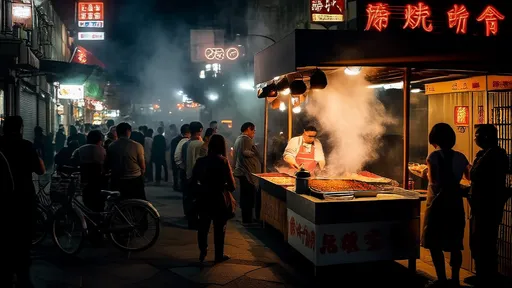
The journey from roadside stall to cultural emblem is also a story of community formation and social cohesion. Street food markets often act as great social equalizers. At a food cart, a CEO and a construction worker might stand side-by-side, united in their appreciation for the perfect banh mi. These spaces facilitate interactions that break down social barriers, creating a rare, informal public sphere. In increasingly segregated and anonymized urban environments, these hubs offer a sense of place and belonging. Night markets in Southeast Asia, for example, are not just places to eat; they are community centers, spaces for family outings, and venues for socializing that are integral to the city's cultural rhythm.
Inevitably, this cultural capital attracted the attention of formal business and municipal governments. Seeing the economic potential, cities that once cracked down on vendors began to implement licensing programs, designate official vending zones, and even organize sanctioned street food festivals. This formalization is a double-edged sword. On one hand, it offers vendors greater stability, legal protection, and access to a wider customer base. On the other hand, it risks sanitizing the very authenticity that made street food appealing in the first place. Regulations, health codes, and rising permit costs can push out the smallest operators, paving the way for commercialized, homogenized versions of the original.
The ultimate sign of a culture's absorption into the mainstream is its commodification. We now see this clearly with street food. Gourmet food trucks in the West, often run by culinary school graduates, sell elevated versions of traditional street foods at premium prices. Global fast-casual chains build their entire brands around the concept of "street food," packaging its rebellious spirit for mass consumption. Supermarkets sell frozen versions of dumplings and samosas, and cooking shows dedicate episodes to replicating street food flavors at home. The aesthetic and ethos of street food have been successfully translated into a highly profitable market category.
Yet, despite this co-option, the soul of street food persists. Its core remains in the family recipes passed down through generations, in the vendor who knows their customers by name, and in its unparalleled ability to adapt and evolve. It represents culinary democracy—high flavor at a low cost, available to all. Its evolution from a neglected informal sector to a celebrated cultural force is a powerful testament to how value and prestige are not inherent but are assigned through complex social, economic, and cultural processes. The street food stall is no longer just a place to eat; it is a symbol of urban identity, a marker of cultural authenticity, and a resilient economic model that continues to nourish cities, both literally and socially, from the ground up.
By /Aug 29, 2025

By /Aug 29, 2025

By /Aug 29, 2025
By /Aug 29, 2025

By /Aug 29, 2025

By /Aug 29, 2025
By /Aug 29, 2025

By /Aug 29, 2025

By /Aug 29, 2025

By /Aug 29, 2025

By /Aug 29, 2025

By /Aug 29, 2025

By /Aug 29, 2025

By /Aug 29, 2025
By /Aug 29, 2025

By /Aug 29, 2025

By /Aug 29, 2025
By /Aug 29, 2025

By /Aug 29, 2025

By /Aug 29, 2025
