As autumn’s crisp air settles over the Korean Peninsula, a centuries-old culinary tradition begins to unfold in homes, backyards, and communities across the nation. This is Kimjang, the annual practice of preparing and preserving vast quantities of kimchi to sustain families through the harsh winter months. Far more than a simple food preservation technique, Kimjang is a profound social ritual, a cultural cornerstone, and a powerful engine of family and community solidarity. The process, which typically reaches its peak in late November, transforms the daunting task of making kimchi from a chore into a cherished collective ceremony, binding generations together through shared labor, ancestral knowledge, and the promise of shared meals to come.
The significance of Kimjang is deeply embedded in the Korean psyche, so much so that in 2013 UNESCO inscribed it onto the Representative List of the Intangible Cultural Heritage of Humanity. This recognition was not merely for the delicious fermented side dish itself, but for the social practice and communal spirit it embodies. UNESCO noted that Kimjang reaffirms Korean identity and is an excellent opportunity for strengthening family cooperation. It is a time when Koreans can express their generosity, sharing, and a sense of belonging, regardless of their economic or social status. The preparation of kimchi, therefore, is not a solitary act of cooking but a performance of culture and kinship.
The ritual begins weeks in advance with the careful sourcing of ingredients. Napa cabbages, the most common base for kimchi, are selected for their size and freshness. Mountains of bright red Korean chili peppers are ground into fine powder, and countless radishes are peeled and julienned. Garlic, ginger, scallions, and jeotgal (salted seafood) are prepared in precise quantities, each family guarding their unique ratio that defines their household’s signature flavor. This preparatory phase is itself a communal activity, often involving trips to markets together and the sharing of tips on finding the best produce. The anticipation builds, setting the stage for the main event.
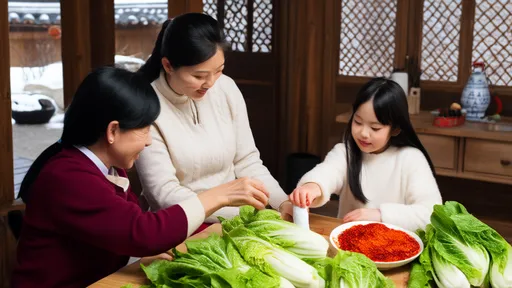
On the day of Kimjang, homes buzz with a palpable energy. Family members, often spanning three or four generations, gather with a clear, unified purpose. Grandmothers, the revered custodians of time-honored recipes, assume their roles as master conductors. Their hands, skilled from decades of practice, mix the potent paste of chili, garlic, and fermented seafood with an intuition that cannot be found in any cookbook. They guide the younger generations, teaching them the proper way to smear each cabbage leaf with the spicy marinade, ensuring every layer is thoroughly and evenly coated. This is where the true magic happens: the intergenerational transfer of knowledge. It is a living dialogue, not taught in schools but passed down through action, story, and touch.
Meanwhile, the middle generation—parents, aunts, and uncles—tackle the heavy lifting. They are the workhorses, washing the brined cabbages, hauling large basins of ingredients, and managing the logistics of the operation. They bridge the wisdom of the elders and the curiosity of the youth, often explaining the why behind the how to the children. The youngest members of the family, though their tasks may be small—stirring a bowl, fetching a tool, or taste-testing the final product—are made to feel essential. Their participation is their initiation into a familial lineage, a tangible way of connecting to their heritage and understanding their place within the family unit. Laughter and stories fill the air, intertwining with the pungent aroma of garlic and fermentation, creating a tapestry of sensory memories that will last a lifetime.
This collaborative effort is a powerful antidote to the increasing individualism and fast-paced nature of modern life. In a world where family meals can be fragmented by busy schedules and digital distractions, Kimjang demands presence, physical cooperation, and undivided attention. There are no shortcuts. The process requires everyone to literally get their hands dirty, working side-by-side toward a common goal. This shared physical labor fosters a deep, non-verbal form of communication and bonding. It builds a sense of mutual reliance and accomplishment that is increasingly rare. After hours of work, the sight of dozens of glossy, ruby-red kimchi jars, neatly packed and ready to be stored, provides a profound sense of achievement that everyone present had a hand in creating.
Furthermore, Kimjang extends its unifying force beyond the immediate family, strengthening the wider community. It is common for neighbors to join forces, taking turns helping each other with their Kimjang. Apartments buildings might designate a common area for residents to work together. This neighborly cooperation, known as pumasi, is a traditional system of labor exchange that deepens social ties and ensures no household is burdened alone. The finished product, this labor of love, is also never kept solely for oneself. Jars of freshly made kimchi are exchanged with neighbors, relatives, and friends. A household’s kimchi is a point of pride, and gifting it is an act of generosity and care. This circulation of kimchi weaves a web of reciprocity and goodwill throughout the community, reinforcing a shared identity and collective well-being.
The culmination of the Kimjang ritual is not the final sealed jar, but the first shared meal that features the freshly fermented kimchi. Sitting down together to eat the product of their collective labor is the final, essential act of the ceremony. It is a moment of reflection and enjoyment, tasting the literal fruits of their cooperation. This meal symbolizes provision, health, and the hope that the family will thrive together through the winter. The kimchi made during Kimjang will nourish them for months, each bite a reminder of the day they spent together, strengthening their bonds with every sour, spicy, and savory mouthful.
In essence, the kimchi pickling season is a masterclass in social cohesion. It transforms a practical necessity into a meaningful tradition that actively constructs and reinforces family and community unity. Through the shared, hands-on process of Kimjang, Koreans perpetuate their cultural heritage, bridge generational gaps, and build networks of mutual support. It is a vibrant, living tradition that proves that some of the strongest bonds are not forged in grand ceremonies, but around a shared basin of cabbages and chili paste, with laughter, stories, and loving hands working in unison.
By /Aug 29, 2025

By /Aug 29, 2025
By /Aug 29, 2025
By /Aug 29, 2025
By /Aug 29, 2025

By /Aug 29, 2025
By /Aug 29, 2025

By /Aug 29, 2025

By /Aug 29, 2025
By /Aug 29, 2025
By /Aug 29, 2025

By /Aug 29, 2025

By /Aug 29, 2025
By /Aug 29, 2025
By /Aug 29, 2025

By /Aug 29, 2025

By /Aug 29, 2025
By /Aug 29, 2025

By /Aug 29, 2025

By /Aug 29, 2025
