In the quiet moments of pulling a wool sweater over your head, a familiar crackle and faint blue spark often accompany the gesture. This common winter phenomenon, while sometimes a minor annoyance, is a profound display of physics in action, a process known as triboelectric charging. The study of static electricity in wool sweaters delves into the intricate world of fiber friction, electron transfer, and the subsequent accumulation of charge, a topic that marries everyday experience with complex physical principles.
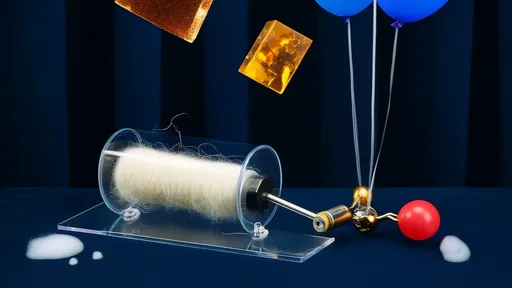
The fundamental mechanism at play is the triboelectric effect. When two dissimilar materials come into contact and are then separated, a transfer of electrical charge can occur between them. In the case of a wool sweater, the primary actors are the wool fibers themselves and another material, most commonly synthetic fibers from other garments like polyester or nylon, or even human hair and skin. Wool, being composed primarily of the protein keratin, has a strong tendency to lose electrons when rubbed against many synthetic materials, which have a higher affinity for gaining electrons. This electron transfer leaves the wool fibers with a net positive charge, while the other material acquires a net negative charge. The act of putting on or taking off the sweater provides the necessary friction and separation to initiate this process on a massive scale across millions of individual fiber contacts.
The journey of a single electron from a wool fiber to a polyester thread is just the beginning. The real story of the noticeable shock or clinging fabric lies in the accumulation of these charges. Individual charge transfers are minuscule, but as countless fibers rub against each other during movement, these tiny charges sum up. This accumulation occurs because the charges become trapped on the surface of the insulating materials. Neither wool nor most common synthetic fabrics are good conductors of electricity. Therefore, the electrons that have been transferred cannot easily flow back to their source or dissipate into the air; they remain localized on the material's surface, building a significant electrical potential difference, or voltage, between the sweater and its surroundings or between different parts of the garment itself.
Several key factors influence the intensity of this charge buildup. The humidity of the environment is a major player. Water molecules in the air are polar and can act as a natural conductor. In humid conditions, these molecules congregate on surfaces, providing a pathway for the accumulated static charge to slowly leak away, preventing it from building to a high level. Conversely, in dry, winter air, the lack of moisture means this charge has no escape route, leading to much higher voltages and more dramatic discharges. The specific materials involved also drastically alter the outcome. The triboelectric series is a list that ranks materials based their tendency to gain or lose electrons. Wool sits quite high on the "loses electrons" side, making it particularly prone to becoming positively charged when paired with materials like nylon, polyester, or acrylic, which are far down on the "gains electrons" side. The force and speed of the friction also contribute; a swift pull of a sweater will generate more charge than a slow, gentle one.
The eventual release of this accumulated energy is what we experience as a static shock. When the voltage difference between the charged sweater and a conductor (like a metal doorknob or another person) becomes great enough, it overcomes the electrical resistance of the air. The air itself ionizes temporarily, creating a conductive plasma channel through which electrons can violently rush to balance the charge difference. This rapid equalization is the spark we see and the snap we hear. On a less dramatic but equally perceptible scale, the accumulated charge can cause the sweater to cling uncomfortably to other garments or to one's body due to electrostatic attraction between the oppositely charged surfaces.
Beyond the simple shock, understanding this physics has practical implications. For the textile industry, controlling static electricity is crucial for comfort, safety, and processing. Anti-static sprays and fabric softeners work by depositing a thin, hygroscopic (water-attracting) layer on the fibers. This layer absorbs moisture from the air, increasing surface conductivity and allowing charges to dissipate before they can accumulate. Alternatively, blending wool with a small percentage of conductive fibers, such as certain metallics or carbon-infused threads, can create a permanent path for charge dispersal within the fabric itself. This is especially important in environments where a spark could ignite flammable substances or damage sensitive electronics.
The principles observed in a wool sweater are not isolated; they are a classic example of a universal physical effect. The same triboelectric process is harnessed in technologies like electrostatic precipitators that clean industrial emissions, and it is the foundation of emerging fields like triboelectric nanogenerators (TENGs), which aim to harvest energy from everyday motions and vibrations. Thus, the next time a sweater sparks, it serves as a miniature, wearable demonstration of the powerful and fundamental forces of electromagnetism that govern everything from domestic life to advanced technology.
In conclusion, the static electricity in a wool sweater is far more than a trivial winter inconvenience. It is a dynamic physical process beginning with electron transfer through friction, leading to charge accumulation on insulating surfaces, and culminating in a sudden discharge. Influenced by material composition, humidity, and motion, this phenomenon is a perfect, tangible example of the triboelectric effect. Its understanding drives innovation in textile design for static control and finds echoes in significant technological applications, reminding us that profound physics can indeed be woven into the very fabric of our daily lives.

By /Aug 27, 2025

By /Aug 27, 2025
By /Aug 27, 2025

By /Aug 27, 2025

By /Aug 27, 2025

By /Aug 27, 2025

By /Aug 27, 2025

By /Aug 27, 2025

By /Aug 27, 2025

By /Aug 27, 2025
By /Aug 27, 2025
By /Aug 27, 2025

By /Aug 27, 2025

By /Aug 27, 2025

By /Aug 27, 2025

By /Aug 27, 2025
By /Aug 27, 2025

By /Aug 27, 2025
By /Aug 27, 2025
By /Aug 27, 2025
