In the age of digital romance and algorithmic matchmaking, a new frontier has emerged where ancient celestial patterns meet cutting-edge astronomical data. The concept of zodiac compatibility has been reimagined through the lens of big data, transforming astrological pairings from mystical guesswork into a statistically-driven analysis of cosmic connections. This fusion of astronomy and astrology offers a fresh perspective on how the stars might influence human relationships, backed by vast datasets and computational power previously unimaginable.
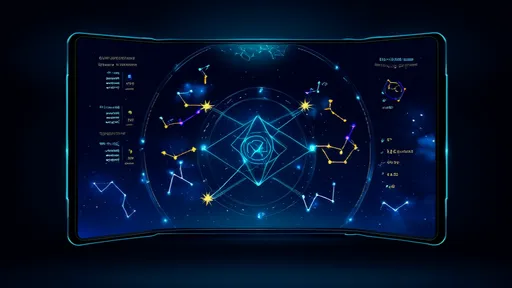
The foundation of this modern approach lies in the meticulous collection and processing of astronomical information spanning centuries. Researchers have compiled detailed records of planetary movements, star positions, and celestial events, creating an unprecedented database of cosmic activity. This astronomical big data serves as the raw material for developing sophisticated compatibility algorithms that go far beyond traditional sun sign comparisons. By analyzing patterns across multiple celestial bodies and their historical relationships, these systems can identify subtle cosmic correlations that might influence human compatibility.
What makes this new methodology particularly compelling is its ability to process complex multi-planetary aspects simultaneously. Traditional astrology often focuses primarily on sun signs, but the big data approach considers the complete natal chart - including the positions of all planets, their aspects to each other, and their relationship to the fixed stars. This comprehensive analysis creates a much more nuanced picture of celestial influences, allowing for more precise compatibility assessments between individuals based on their complete astronomical birth data.
The algorithms developed through this research don't simply calculate compatibility scores; they identify specific patterns of planetary alignment that correlate with successful relationships. By analyzing thousands of documented relationships alongside corresponding astronomical data, researchers have begun identifying celestial configurations that frequently appear in harmonious partnerships. These patterns form the basis of prediction models that can assess potential compatibility with remarkable accuracy, according to preliminary studies.
One of the most fascinating aspects of this research is how it bridges the gap between scientific skepticism and astrological tradition. While mainstream science has historically dismissed astrology as pseudoscience, the data-driven approach lends mathematical rigor to the examination of celestial influences on human behavior. Researchers emphasize that they're not claiming to prove astrology's metaphysical claims, but rather demonstrating that certain astronomical configurations statistically correlate with specific relationship outcomes, regardless of the underlying mechanism.
The practical applications of this research extend beyond romantic pairings. The same algorithms can be adapted to assess compatibility in business partnerships, friendships, and even therapeutic relationships. By understanding the celestial patterns associated with different types of successful interactions, individuals and organizations could make more informed decisions about collaboration and connection. This represents a significant expansion of astrological principles into various aspects of human social dynamics.
Critics of the approach raise important questions about determinism versus free will in relationships. The researchers behind these algorithms are quick to clarify that celestial compatibility should be viewed as potential rather than destiny. The algorithms identify favorable conditions for connection, but human choice, effort, and circumstance ultimately determine relationship outcomes. This perspective maintains respect for individual agency while acknowledging possible cosmic influences on interpersonal dynamics.
The technological infrastructure required for these calculations is substantial. Processing the astronomical data involves sophisticated machine learning algorithms and significant computing power. The systems must account for precise planetary positions at exact birth times, requiring astronomical ephemeris data accurate to the minute. This level of precision represents a quantum leap beyond traditional astrological calculations, which often relied on approximate positions and manual computation.
As the field develops, ethical considerations around data privacy and algorithmic bias have come to the forefront. Researchers must ensure that their compatibility assessments don't reinforce existing social prejudices or create new forms of discrimination. The teams developing these systems are implementing rigorous testing protocols to identify and eliminate biases related to gender, culture, and socioeconomic factors, striving to create tools that enhance rather than limit human connection.
The future of celestial compatibility research points toward increasingly personalized assessments. As astronomical databases grow more comprehensive and machine learning algorithms become more sophisticated, the potential emerges for hyper-individualized compatibility readings that account for subtle celestial variations. Some researchers are even exploring how real-time astronomical events might influence existing relationships, creating dynamic compatibility models that evolve with the moving heavens.
Despite the advanced technology involved, practitioners of this new approach maintain respect for astrological tradition. Many see their work not as replacing traditional astrology, but as providing a new mathematical language for understanding ancient wisdom. The symbolic meanings assigned to planets and aspects throughout astrological history are being examined through the lens of statistical correlation, creating a fascinating dialogue between empirical data and interpretive tradition.
The cultural impact of data-driven astrological compatibility is already becoming apparent. Dating platforms are beginning to incorporate celestial compatibility scores alongside other matching criteria, and relationship counselors are experimenting with astronomical insights as part of their practice. This represents a remarkable moment of convergence between ancient celestial observation and modern data science, suggesting new ways that humanity might understand the age-old question of what makes relationships work.
As research continues, the scientific community remains appropriately skeptical but increasingly engaged with these developments. Peer-reviewed studies are beginning to emerge that test the statistical validity of various astrological claims using large datasets. While definitive conclusions remain elusive, the conversation between astronomers, data scientists, and traditional astrologers is generating fascinating insights regardless of one's stance on astrology's validity.
The intersection of big data and celestial compatibility ultimately reflects humanity's enduring desire to find patterns and meaning in the cosmos. Whether these algorithms ultimately prove to be accurate predictors of relationship success or simply interesting statistical curiosities, they represent a fascinating chapter in the long human tradition of looking to the stars for guidance in matters of the heart. The marriage of astronomical data and relationship science continues to evolve, promising new insights into the ancient mystery of human connection.

By /Aug 27, 2025

By /Aug 27, 2025
By /Aug 27, 2025

By /Aug 27, 2025

By /Aug 27, 2025

By /Aug 27, 2025

By /Aug 27, 2025

By /Aug 27, 2025

By /Aug 27, 2025

By /Aug 27, 2025
By /Aug 27, 2025

By /Aug 27, 2025

By /Aug 27, 2025

By /Aug 27, 2025

By /Aug 27, 2025

By /Aug 27, 2025

By /Aug 27, 2025

By /Aug 27, 2025

By /Aug 27, 2025

By /Aug 27, 2025
