Cycling enthusiasts and competitive riders alike understand that the heart of a bicycle's performance lies in its drivetrain. The intricate dance between gear ratios and cadence is not merely a matter of mechanical specification but a fundamental aspect of riding efficiency, power output, and overall experience. For decades, riders have tinkered with chainrings, cassettes, and pedaling rhythms seeking that elusive optimal setup. This pursuit, blending engineering principles with human physiology, remains a critical focus for anyone serious about cycling performance.
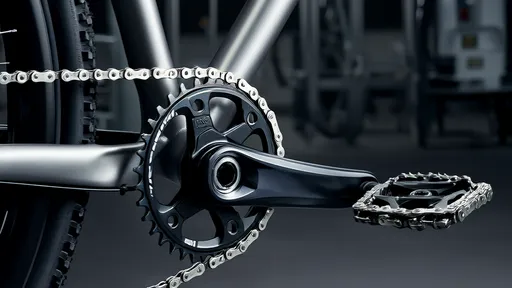
The concept of gear ratio, at its core, is beautifully simple: it is the ratio between the number of teeth on the chainring (attached to the pedals) and the number of teeth on the cog (attached to the rear wheel). A larger chainring or a smaller cog results in a higher gear ratio, meaning each pedal stroke propels the bicycle a greater distance, but requires more force. Conversely, a smaller chainring or a larger cog yields a lower gear ratio, allowing for easier pedaling but covering less ground per revolution. This mechanical advantage is the rider's primary tool for adapting to varying terrain and conditions.
Cadence, or pedaling rate measured in revolutions per minute (RPM), is the human element in this equation. It represents the rhythm at which a rider applies power to the pedals. There is a longstanding debate about the ideal cadence, often centered around a mythical "sweet spot," typically cited between 80 and 100 RPM. However, this is not a one-size-fits-all figure. Cadence preference is deeply personal, influenced by a rider's physiology, muscle fiber composition, training background, and even the specific event they are preparing for. A track sprinter might thrive at a lower, torque-heavy cadence, while a road time-trialist might aim for a high, spinning rhythm.
The true magic, and the central theme of optimization, occurs at the intersection of gear ratio and cadence. This relationship directly determines the bicycle's speed and the rider's metabolic efficiency. Selecting too high a gear (a large ratio) forces a low cadence, rapidly fatiguing muscles as they struggle against high resistance. This is often described as "mashing" the pedals. On the other hand, selecting too low a gear (a small ratio) and spinning at an excessively high cadence can lead to a different kind of inefficiency, where energy is wasted on the rapid up-and-down motion of the legs rather than being translated into forward propulsion, sometimes called "spinning out."
The goal, therefore, is to find a harmonious balance where the rider can maintain a steady, sustainable power output with a cadence that feels natural and efficient. This optimal point minimizes muscular and cardiovascular fatigue, allowing for longer, faster, and more comfortable rides. It is the zone where the engine (the rider) and the machine (the bicycle) work in perfect synergy. Modern technology, particularly the widespread adoption of electronic gear-shifting systems and advanced bike computers, has provided riders with unprecedented data to analyze this relationship, moving optimization from guesswork to a science.
Terrain is the great variable that dictates strategy. On flat, smooth roads, the optimization problem is often about maximizing aerodynamic efficiency and finding a rhythm that can be held for hours. Riders might choose a tighter cassette cluster with smaller gaps between gears to fine-tune their cadence. Here, the classic 53/39T chainring set paired with an 11-25T cassette has long been a standard, allowing for high speeds at manageable cadences. The optimization is about marginal gains—shifting one cog to maintain exactly 95 RPM as the wind slightly changes.
Climbing introduces a completely different set of parameters. The force of gravity becomes the dominant opponent, and the optimization shifts dramatically toward managing muscular fatigue and sustaining power. Here, lower gear ratios are paramount. The recent trend toward "1x" (single chainring) setups for gravel and mountain biking, and even compact (50/34T) or super-compact (48/31T) chainrings for road cycling, highlights this need. The objective is to have a gear low enough to keep the cadence in a productive range, often above 70 RPM, even on steep gradients. Spinning a lighter gear is almost always more efficient than grinding a heavy one, as it saves the leg muscles for the entire duration of the climb.
Descending and high-speed flat sections present the opposite challenge. Here, the limitation is often the highest available gear ratio. The rider may find themselves "spun out," where their cadence has maxed out at a physiological limit (e.g., 120-130 RPM) yet they are unable to accelerate further. Optimization in this scenario is about equipment selection—ensuring the bike is equipped with a large enough chainring and a small enough cog (like an 11-tooth or even a 10-tooth) to provide adequate gearing for these high-speed scenarios. For time-trialists, this is a critical calculation, as every second spent spun out is a second of wasted potential power.
Beyond the hardware, the rider's own fitness and technique play a colossal role in this optimization. A powerful, well-trained rider can effectively turn a higher gear at a moderate cadence, producing immense wattage. Another rider might possess incredible cardiovascular efficiency, excelling at churning out power at a very high cadence with less muscular strain. This is why pros spend countless hours on SRMs and other power meters, not just to get fitter, but to understand their personal cadence-power relationship. They identify the cadence band where they are most metabolically efficient for a given power output, and then they select their gearing to keep them in that band as the road changes.
Ultimately, the optimization of bicycle chain drive gearing and cadence is a dynamic and deeply individual process. It is a continuous dialogue between the rider, the bike, and the road. There is no universal chart or formula that can dictate the perfect setup for every person. It requires self-awareness, experimentation, and a willingness to listen to one's body. The clatter of a chain shifting to a more suitable cog is the sound of this ongoing conversation—a mechanical adjustment in service of a profoundly human pursuit: the search for perfect, effortless, flowing speed.

By /Aug 27, 2025

By /Aug 27, 2025

By /Aug 27, 2025

By /Aug 27, 2025

By /Aug 27, 2025

By /Aug 27, 2025

By /Aug 27, 2025

By /Aug 27, 2025

By /Aug 27, 2025

By /Aug 27, 2025
By /Aug 27, 2025

By /Aug 27, 2025
By /Aug 27, 2025

By /Aug 27, 2025

By /Aug 27, 2025

By /Aug 27, 2025
By /Aug 27, 2025
By /Aug 27, 2025
By /Aug 27, 2025

By /Aug 27, 2025
