Spiral Staircase Geometry: Visualizing the Catenary Equation"

Aug 27, 2025 By

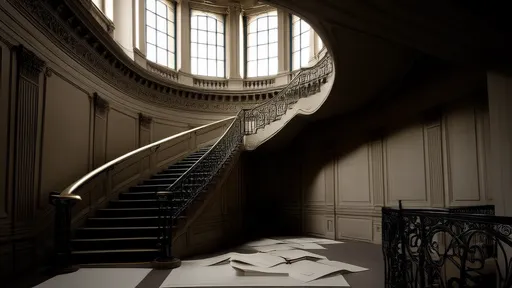
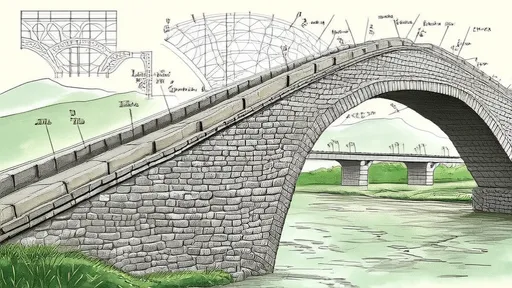
In the quiet corners of architectural history, where mathematics meets masonry, there exists a peculiar intersection of form and function that has captivated builders and mathematicians alike for centuries. The geometry of spiral staircases represents one of the most elegant applications of mathematical principles to structural design, with the catenary curve standing as its unsung hero. While most observers admire spiral staircases for their aesthetic appeal or space-saving efficiency, few recognize the sophisticated mathematical underpinnings that give these structures their remarkable stability and grace.

The story begins not with staircases, but with chains. When a uniform chain is suspended freely from two points, it naturally forms what mathematicians call a catenary curve—a word derived from the Latin catena, meaning chain. This curve possesses extraordinary mechanical properties: it represents the ideal shape for a hanging chain supporting only its own weight, distributing tension perfectly along its length. For spiral staircases, this principle translates beautifully to the hanging handrail, which when inverted, provides the optimal structural form for supporting the steps while minimizing material stress.

What makes the catenary so remarkable in staircase design is its relationship with gravitational forces. When architects invert the catenary curve to create the central column or supporting structure of a spiral staircase, they essentially create a compression-only form—the exact opposite of the tension-only hanging chain. This inverted catenary provides unparalleled stability, as each component of the structure handles compressive forces in the most efficient manner possible. The result is a staircase that feels both impossibly delicate and remarkably sturdy, a paradox that has fascinated architects from Gothic times to the present day.

The visualization of catenary equations in staircase design represents a fascinating convergence of abstract mathematics and practical construction. Through parametric equations and modern computational tools, designers can now precisely calculate the optimal curve for any given staircase configuration. The mathematical expression y = a cosh(x/a) – where cosh represents the hyperbolic cosine function – might seem abstract on paper, but when rendered in three dimensions becomes the blueprint for breathtaking architectural features. This translation from equation to edifice demonstrates how ancient mathematical principles continue to inform cutting-edge design.

Historical examples of catenary-inspired staircases abound, though their builders often arrived at the forms through intuition rather than explicit mathematical understanding. Medieval masons constructing spiral staircases in castle towers discovered through trial and error that certain curves provided better structural integrity than others. The magnificent staircases of Renaissance palaces, particularly those in Italian villas, often exhibit nearly perfect catenary forms despite their architects lacking formal knowledge of the underlying mathematics. These craftsmen essentially reverse-engineered the mathematics through observational wisdom and accumulated building experience.

The Gothic period witnessed particularly sophisticated applications of catenary principles, though builders of the time would not have expressed their knowledge in mathematical terms. The famous spiral staircases of Chartres Cathedral and other medieval structures demonstrate an intuitive grasp of optimal curvature that would only later be formalized mathematically. The stonemasons' guilds guarded their construction secrets closely, passing down dimensional relationships and proportional systems that effectively encoded mathematical principles without explicit equations. This transmission of practical knowledge represented an alternative form of mathematical understanding—one based on geometry and proportion rather than algebraic formulation.

The formal mathematical understanding of the catenary curve began to emerge during the Scientific Revolution, with figures like Galileo, Hooke, and eventually the Bernoulli brothers contributing to its theoretical foundation. The famous challenge issued by Johann Bernoulli in 1696—the brachistochrone problem—ultimately led to deeper investigations of curves including the catenary. It was Christiaan Huygens who first used the term "catenaria" in a letter to Leibniz in 1690, and the mathematical properties were further developed by David Gregory in his 1697 work Catenaria. These developments gradually filtered into architectural practice, allowing for more deliberate and precise application of catenary principles.

Modern computational design has revolutionized the implementation of catenary curves in staircase architecture. Parametric modeling software enables designers to input specific constraints—ceiling height, available floor space, desired tread dimensions—and generate optimal catenary forms that meet these requirements while maintaining structural efficiency. This digital approach allows for experimentation with variations that would have been prohibitively time-consuming to calculate manually. Architects can now visualize how subtle changes to the mathematical parameters affect the final form, enabling truly customized solutions for each unique architectural context.

The aesthetic implications of catenary-based design extend beyond mere structural efficiency. There is an inherent beauty to the catenary curve that humans seem to recognize intuitively—a graceful, natural form that echoes curves found throughout the natural world, from the drape of vines to the arch of a gateway. When embodied in a spiral staircase, this curve creates a visual rhythm that guides the eye upward while suggesting motion and fluidity. The psychological impact is significant: catenary-based staircases often feel more inviting and organic than those based on simpler geometric curves like circular arcs or straight lines.

Material considerations play a crucial role in the realization of catenary-inspired staircases. Traditional stone construction demanded massive central columns to support the cantilevered steps, resulting in dramatic, monumental staircases that dominated their architectural spaces. The development of iron and steel construction allowed for more slender central supports, enabling designers to create staircases that appear to float effortlessly while still following catenary principles. Contemporary materials like reinforced concrete and structural glass have pushed these possibilities even further, creating staircases that seem to defy gravity while actually working in perfect harmony with it.

The relationship between the catenary curve and double-curvature surfaces represents another fascinating dimension of this geometric exploration. Some of the most innovative contemporary staircases employ minimal surfaces—complex three-dimensional forms that extend the catenary principle into sophisticated spatial configurations. These designs often emerge from advanced computational processes that would have been unimaginable to earlier generations of architects, yet they remain fundamentally rooted in the same mathematical principles that governed medieval staircase construction. The continuity of mathematical truth across centuries of architectural innovation presents a powerful testament to the enduring relevance of fundamental geometric principles.

Educational implications of this intersection between mathematics and architecture are profound. The visualization of catenary equations through physical structures like spiral staircases provides a tangible bridge between abstract mathematical concepts and their practical applications. Students of architecture who might struggle with the purely theoretical aspects of calculus or parametric equations often find their understanding transformed when they see these principles embodied in physical structures they can walk on and touch. This embodied learning experience demonstrates the power of integrating mathematical education with practical, visual examples.

Looking toward the future, the integration of catenary principles in staircase design continues to evolve with emerging technologies. 3D printing now enables the creation of complex catenary forms that would be difficult or impossible to produce using traditional manufacturing techniques. Augmented reality tools allow designers to visualize catenary-based staircases in situ before construction begins. And advances in material science promise ever more slender and dramatic implementations of these ancient mathematical principles. Despite these technological advances, the fundamental elegance of the catenary curve remains unchanged—a timeless mathematical truth that continues to inspire architectural innovation.

The geometry of spiral staircases and the visualization of catenary equations represent more than just a technical achievement—they embody the enduring dialogue between mathematics and art, between calculation and creativity. These staircases stand as physical manifestations of mathematical elegance, reminding us that the most practical solutions often emerge from the most abstract principles. As we continue to push the boundaries of architectural design, the humble catenary curve remains a testament to the power of mathematical thinking to create structures that are not only stable and efficient, but truly beautiful.

Recommend Posts
Romance

Rain Noise: The Intimate Distance Algorithm in a Heavy Downpour

By /Aug 27, 2025

In an age where digital soundscapes are increasingly woven into the fabric of daily life, a peculiar and deeply resonant trend is emerging from the cacophony of available audio content. The specific allure of rain sounds, particularly the immersive experience of a heavy downpour, is being harnessed in unexpected ways, giving rise to what some audio engineers and sociologists are tentatively calling an "algorithm of intimate distance." This concept explores the paradoxical space where a sound associated with isolation and separation—the wall of a storm—is being used to foster a sense of closeness and shared experience among listeners scattered across the globe.
Romance

Pigeon Post: The Miracle of Avian Magnetic Sense Navigation"

By /Aug 27, 2025

For centuries, the homing pigeon has captivated human imagination with its uncanny ability to navigate across vast, unfamiliar territories to return to its loft. While these birds were historically employed as messengers in ancient civilizations and wartime operations, the true marvel lies not in their utility but in their biological sophistication. The phenomenon of pigeon homing represents one of nature’s most exquisite adaptations, blending sensory perception, environmental interaction, and innate instinct into a seamless navigational system.
Romance

Constellation Matchmaking Algorithm: Destiny Under the Astronomical Big Data"

By /Aug 27, 2025

In the age of digital romance and algorithmic matchmaking, a new frontier has emerged where ancient celestial patterns meet cutting-edge astronomical data. The concept of zodiac compatibility has been reimagined through the lens of big data, transforming astrological pairings from mystical guesswork into a statistically-driven analysis of cosmic connections. This fusion of astronomy and astrology offers a fresh perspective on how the stars might influence human relationships, backed by vast datasets and computational power previously unimaginable.
Romance

The Fluid Mechanics of Duet Dance: The Balance Equation in Rotation"

By /Aug 27, 2025

In the intricate world of dance, few forms capture the essence of symbiotic motion as profoundly as the pas de deux, or partner dance. While traditionally analyzed through the lenses of artistry, choreography, and human kinetics, a novel and compelling perspective is emerging from an unexpected discipline: fluid dynamics. The application of fluid mechanical principles, specifically the equations governing balance in rotational systems, to the study of two dancers in motion offers a groundbreaking framework for understanding the invisible forces that bind their movement into a single, cohesive unit. This interdisciplinary approach, which we might term The Hydrodynamics of Duet Dance: Equilibrium Equations in Rotation, deciphers the elegance of a turning lift or a spinning descent not merely as artistic expression, but as a precise physical negotiation with fundamental laws of motion.
Romance

Coffee Latte Art: Morse Code in a Cappuccino Cup"

By /Aug 27, 2025

In the bustling cafes from Melbourne to Milan, a silent language is being poured into porcelain cups. This is not the language of beans or roasts, but of art—a delicate, frothy lexicon known to a select few as the Morse code of milk. The swirls, hearts, and intricate patterns adorning the surface of a latte are far more than mere decoration; they are a clandestine communication system, a hidden dialogue between barista and initiate, a story waiting to be read before the first sip is taken.
Romance

Firefly Algorithm: Decoding Courtship in Nature

By /Aug 27, 2025

In the quiet, moon-drenched meadows and forests across the globe, a silent symphony of light unfolds each night. Among the most mesmerizing performers are fireflies, whose intricate flashing patterns have long captivated human observers. What appears as mere biological spectacle to the naked eye, however, conceals one of nature’s most sophisticated communication systems—a complex language of light that has inspired a remarkable computational approach known as the Firefly Algorithm.
Romance

Synchronized Heartbeat Experiment: The Mystery of Dual-Person Heart Rhythm Resonance"

By /Aug 27, 2025

In the quiet hum of a research laboratory, two participants sit facing each other, electrodes attached to their chests, as soft ambient music plays in the background. They are instructed simply to breathe together and maintain eye contact. On the monitor, their heart rates—initially erratic and independent—begin to shift. Slowly, almost imperceptibly, the jagged lines on the screen start to mirror one another, rising and falling in a synchronized dance. This is the heartbeat synchronization experiment, a fascinating phenomenon where two hearts, against all odds, begin to beat as one.
Romance

Paper Boat Post Office: Drifting Messengers in the Rainy Season Sewers

By /Aug 27, 2025

In the heart of the monsoon season, when the skies weep relentlessly and the city's veins swell with rainwater, an unusual postal service emerges from the depths. Known as the Paper Boat Post Office, this ephemeral operation transforms the often-dreaded urban waterways into channels of human connection, carrying handwritten messages on delicate paper vessels through the labyrinthine sewers systems. It is a testament to the resilience of human spirit and the poetic interplay between nature's forces and urban life.
Romance

Aurora Wishes: Starlight Oaths Under the Night Sky's Silk

By /Aug 27, 2025

Under the vast expanse of the night sky, where darkness meets the infinite, there exists a phenomenon that has captivated human hearts for centuries—the aurora. Known as nature’s most breathtaking light show, these shimmering curtains of color have long been intertwined with folklore, romance, and the deepest of human desires. In the quiet solitude of polar nights, beneath what can only be described as a velvet tapestry woven with starlight, people have whispered their dreams to the heavens, hoping the aurora might carry them into reality.
Romance

Aluminum Foil Tablet Blister Packaging: Time Management for Pharmaceutical Stability"

By /Aug 27, 2025

In the intricate world of pharmaceutical packaging, the stability of medicinal formulations remains a paramount concern, directly influencing both efficacy and patient safety. Among the various packaging methodologies, blister packaging utilizing aluminum foil has emerged as a cornerstone technology, particularly for its exceptional barrier properties against environmental aggressors such as moisture, oxygen, and light. This article delves into the critical relationship between aluminum foil blister packaging and the temporal management of drug stability, exploring how this packaging form not only protects but also defines the shelf-life and integrity of pharmaceutical products.
Romance

Algorithm for Wheelchair Ramp Slope: Ensuring Safety with Friction Coefficients

By /Aug 27, 2025

In the realm of accessibility engineering, few calculations carry as much weight—both literally and metaphorically—as the algorithms governing wheelchair ramp gradients. The recent technical paper titled Wheelchair Ramp Gradient Algorithms: Safety Assurance Through Coefficient of Friction has brought renewed attention to the critical interplay between slope design and surface friction, a relationship that often goes overlooked in both public discourse and regulatory frameworks. For decades, the conversation around accessible infrastructure has centered primarily on compliance with minimum width requirements and the presence of handrails, but this research pivots the focus toward the physics of movement itself, arguing that a ramp's safety cannot be guaranteed by angle alone.
Romance

Ice Window Crystal Growth: The Process of Water Vapor Deposition in Low-Temperature Environments

By /Aug 27, 2025

In the silent, frigid embrace of polar nights and high-altitude clouds, a delicate architectural marvel unfolds, largely unseen by human eyes. The formation of ice window crystals, those intricate and often breathtaking structures that adorn cold surfaces, represents one of nature's most exquisite examples of spontaneous design. Recent interdisciplinary research has begun to peel back the layers of this complex process, revealing a world where temperature, humidity, and molecular physics engage in a subtle dance to create transient beauty.
Romance

Optimization of Gear Ratio and Cadence in Bicycle Chain Drive Systems

By /Aug 27, 2025

Cycling enthusiasts and competitive riders alike understand that the heart of a bicycle's performance lies in its drivetrain. The intricate dance between gear ratios and cadence is not merely a matter of mechanical specification but a fundamental aspect of riding efficiency, power output, and overall experience. For decades, riders have tinkered with chainrings, cassettes, and pedaling rhythms seeking that elusive optimal setup. This pursuit, blending engineering principles with human physiology, remains a critical focus for anyone serious about cycling performance.
Romance

Thermal Expansion Coefficient Compensation in Joint Materials: A Study on Concrete"

By /Aug 27, 2025

In the realm of construction engineering, the management of thermal expansion in concrete structures remains a critical yet often overlooked aspect of design integrity. As temperatures fluctuate, concrete expands and contracts, generating internal stresses that can lead to cracking, structural deformation, or even failure if not properly addressed. The science behind compensating for these dimensional changes revolves around the strategic implementation of expansion joints and the materials that facilitate their function. This field, often referred to as expansion joint material science, combines principles of physics, material engineering, and practical construction methodologies to ensure longevity and safety in infrastructure.
Romance

Spiral Staircase Geometry: Visualizing the Catenary Equation"

By /Aug 27, 2025

In the quiet corners of architectural history, where mathematics meets masonry, there exists a peculiar intersection of form and function that has captivated builders and mathematicians alike for centuries. The geometry of spiral staircases represents one of the most elegant applications of mathematical principles to structural design, with the catenary curve standing as its unsung hero. While most observers admire spiral staircases for their aesthetic appeal or space-saving efficiency, few recognize the sophisticated mathematical underpinnings that give these structures their remarkable stability and grace.
Romance

Optical Glass Curtain Wall: Emotional Barrier of Transmission and Reflection Ratio

By /Aug 27, 2025

In the architectural landscape of modern cities, glass curtain walls have become synonymous with progress and sophistication. These shimmering facades reflect our aspirations toward transparency and connectivity, yet they simultaneously create subtle but profound emotional barriers. The interplay of light through these surfaces—governed by precise optical properties like transmission and reflection ratios—shapes not only the physical environment but also the psychological experiences of those who live and work within these glass-clad structures.
Romance

Stress Distribution in Arch Bridges: Mathematical Modeling of Stone Load-bearing

By /Aug 27, 2025

In the realm of civil engineering, few structures capture the imagination quite like the stone arch bridge. These timeless marvels, which have gracefully spanned rivers and valleys for millennia, represent a perfect fusion of artistry and scientific precision. While their aesthetic appeal is undeniable, the true genius of these structures lies hidden within their carefully calculated stress distributions—a topic that has fascinated engineers and mathematicians for centuries. Recent advancements in computational modeling have breathed new life into this ancient engineering form, allowing researchers to develop increasingly sophisticated mathematical frameworks to understand and predict how these structures bear their loads.
Romance

Strength of Riveted Structures: Calculation of Force Distribution in Multi-point Connections"

By /Aug 27, 2025

In the realm of structural engineering, the integrity of assemblies often hinges on the performance of their connections. Among these, riveted joints stand as a cornerstone of traditional and modern construction, from the skeletal frames of aircraft to the girders of monumental bridges. The calculation of force distribution in multi-point riveted structures is not merely an academic exercise; it is a critical discipline that ensures safety, durability, and efficiency in design. This deep dive explores the nuanced principles and methodologies that govern how loads are shared across an array of rivets, a subject where precision meets practicality.
Romance

Mechanical Switch Actuation Mechanics: Optimization of Trigger Curves for Mechanical Switches"

By /Aug 27, 2025

The world of mechanical keyboards has evolved far beyond the simple binary actuation of membrane switches, entering a realm where every millimeter of travel and every gram of force is meticulously measured, debated, and engineered. At the heart of this precision-driven community lies a concept both fundamental and profoundly complex: the force curve. It is the graphical representation of a switch's soul, a plot that tells the story of every keypress from the initial resting state to the satisfying bottom-out and the eventual return. For decades, enthusiasts and manufacturers alike have treated these curves as a near-sacred text, a predetermined gospel handed down by switch designers. However, a quiet revolution is brewing, moving beyond mere selection of pre-made switches and into the active, algorithmic optimization of the trigger curve itself.
Romance

Sweater Static Electricity Physics: Charge Accumulation from Fiber Friction"

By /Aug 27, 2025

In the quiet moments of pulling a wool sweater over your head, a familiar crackle and faint blue spark often accompany the gesture. This common winter phenomenon, while sometimes a minor annoyance, is a profound display of physics in action, a process known as triboelectric charging. The study of static electricity in wool sweaters delves into the intricate world of fiber friction, electron transfer, and the subsequent accumulation of charge, a topic that marries everyday experience with complex physical principles.